Recycled plastic resin is taking a larger share of the market because brand owners, regulators and buyers are all asking for recycled content, and because clean recycled material can cost less than virgin resin. Virgin resin still wins where a part needs tight, certified properties, such as food contact, medical use or demanding engineering parts. For most molded and extruded products made from HDPE and polypropylene, well-sorted recycled resin is a practical option today, and demand for it is likely to keep growing.
Key takeaways
- Virgin resin prices follow oil, natural gas and petrochemical capacity, so they can swing hard and fast.
- Recycled resin prices depend more on the supply of clean scrap and on processing costs, though they still move partly with virgin prices.
- Post-industrial regrind from a known, single-resin source is usually the most consistent recycled material a molder can buy.
- Recycled content requirements in packaging, plus corporate commitments, are steadily pushing demand up.
- Chemical recycling may handle mixed and contaminated plastics in the future, but mechanical recycling does most of the work now.
What virgin and recycled resin actually are
Virgin resin is plastic made for the first time from petrochemical feedstocks. Ethane from natural gas or naphtha from crude oil is cracked into monomers such as ethylene and propylene, which are then polymerized into pellets. Those pellets come with a data sheet: melt flow index, density, additives and a consistent color.
Recycled resin is plastic that has already been made into a part, a package or a production scrap and then processed back into a usable raw material. The simplest form is regrind, plastic that has been ground into flakes. It may also be washed, melted and re-pelletized, sometimes with additives to adjust its properties.
Where the plastic comes from matters a great deal. Post-industrial (or pre-consumer) scrap comes from factories: purges, trim, runners, off-spec parts and rejected product. Post-consumer scrap comes from bottles, containers and packaging that people used and threw away. Post-industrial material is usually cleaner and more uniform because it has never been mixed with household waste.
Why virgin resin prices are hard to predict
Because virgin plastic starts as oil and gas, its price is tied to energy markets. A refinery outage, a hurricane on the Gulf Coast, a change in natural gas prices or a new cracker coming online can all move resin prices within weeks. Buyers who sign long contracts or quote jobs months ahead carry that risk.
Virgin production also has an environmental cost that more customers ask about. Extracting and cracking fossil feedstocks releases greenhouse gases, and every pound of new resin adds to the plastic that will eventually need to be recycled or disposed of.
How recycled resin pricing works
Recycled resin prices are shaped by different forces: how much clean scrap is available, the cost to collect, sort, grind and clean it, and how many buyers want it. Those costs are steadier than crude oil, which can make recycled material easier to budget for.
The link to virgin pricing does not disappear, though. When virgin resin gets very cheap, some buyers switch back to it, and recycled prices soften. When virgin prices spike, demand for recycled material jumps. A purchasing lead should expect recycled resin to move with the market, usually with less extreme swings.
For manufacturers who generate scrap, the economics also run the other way. Selling or toll processing clean production scrap turns a disposal cost into either revenue or a lower-cost raw material. Our article on plastic grinding and toll processing explains how that works step by step.
Comparing your resin options
| Material | Where it comes from | Consistency | Typical uses |
|---|---|---|---|
| Virgin resin | New polymer made from oil or natural gas | Highest; sold to a published spec | Food contact, medical, precision and engineering parts |
| Post-industrial regrind | Factory scrap, purges, off-spec parts | High when it comes from one resin and one source | Molded containers, crates, pails, pipe, blended back with virgin |
| Post-consumer recycled (PCR) | Used bottles, jugs and packaging | Variable; depends on sorting and washing | Bottles, non-food containers, lumber, film, fiber |
| Chemically recycled feedstock | Plastic broken down to monomers or oils | Can match virgin when purified | Mostly PET and pilot-scale projects today |
Is recycled plastic as good as virgin?
It depends on the resin, the source and the part. Each time plastic is melted, its polymer chains shorten a little, which can lower impact strength and change how it flows. Contamination from other plastics, labels or dirt causes more trouble than reprocessing itself. That is why sorting matters so much.
HDPE and polypropylene handle reprocessing well. Many molders run clean regrind at a set percentage blended with virgin pellets and see no change in part quality. Others run 100% recycled material for products like pails, crates, pallets and non-food containers. The practical approach is to start with a blend, test parts against your specifications, and increase the recycled share as results allow.
Better sorting equipment has narrowed the gap. Near-infrared and optical sorters can identify polymer types at line speed, and additive packages can restore some of the impact strength or stabilize color in recycled blends. Our guide to which industrial plastics can be recycled covers how HDPE, PP, LDPE and PET compare.
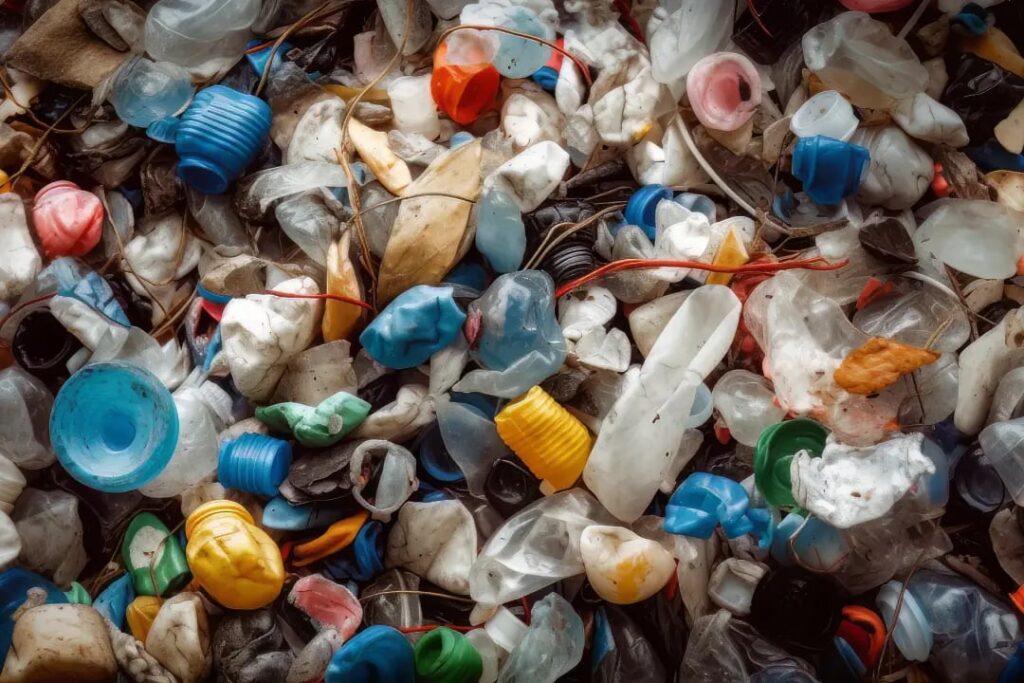
What is pushing demand toward recycled resin
Recycled content rules
Governments are moving from encouraging recycling to requiring recycled content. The European Union has set minimum recycled content targets for plastic packaging, and some U.S. states, including California, require plastic beverage containers to contain a rising share of post-consumer recycled plastic. Extended producer responsibility (EPR) laws, which make brand owners pay for the end of life of their packaging, are spreading among U.S. states as well. Rules differ by state and product, so check the requirements that apply to your own goods.
Customer and corporate commitments
Many large consumer brands have published goals to cut virgin plastic use or raise recycled content in their packaging. Those goals flow down to their suppliers. If you mold or convert for a national brand, expect more requests for recycled content and for documentation that backs it up.
Packaging designed for recycling
Plant-based coatings and adhesives made from starch, cellulose or lignin are being developed to replace some petroleum-based ones. When those layers wash off more easily, the plastic underneath recycles into cleaner resin.
Chemical recycling and depolymerization
Mechanical recycling, which means grinding, washing and remelting, works best on clean, single-resin plastic. Chemical recycling tries to handle what mechanical recycling cannot. Depolymerization breaks a polymer back down into its monomers, which can then be purified and polymerized into new resin that behaves like virgin material.
Solvolysis uses solvents and works well on PET. Pyrolysis heats plastic without oxygen and produces oils and gases that can become new plastic or fuel. Companies such as Loop Industries and Carbios have developed PET depolymerization processes, including an enzyme-based one.
The open questions are cost, energy use and scale. For now, chemical recycling is small next to mechanical recycling, and most recycled HDPE and polypropylene still comes from sorting, grinding and remelting. For a manufacturer today, the most reliable path to recycled content is keeping your own scrap clean and separated so it can go straight back into use.
What this means for your plant
If you generate plastic scrap, the shift toward recycled resin makes that scrap more valuable. A few habits make a big difference:
- Keep each resin type in its own container, and keep colors separate when you can.
- Keep trash, metal, paper and labels out of plastic scrap.
- Write down what each stream is (resin, grade, color) so a buyer or processor knows what they are getting.
- Ask whether your scrap could be ground and returned to you for reuse in your own process.
At AP&J we grind post-industrial plastics, mainly HDPE and polypropylene, into regrind for molders and compounders, and we buy and sell plastic scrap. We can also set up a full circle recycle program so your scrap comes back to you as usable material. We sell regrind in any resin we process, so if you are looking for regrind for your own production, ask us what we have available.
Frequently asked questions
Is recycled plastic resin cheaper than virgin resin?
Clean recycled resin and regrind are often priced below comparable virgin resin, but the gap changes with the market. When virgin prices drop sharply, the difference narrows. Many buyers use recycled resin both to lower average cost and to reduce exposure to virgin price spikes.
Which plastics are easiest to turn into recycled resin?
HDPE, polypropylene and PET are the most widely recycled resins. Post-industrial HDPE and PP scrap is especially useful because it is usually clean and from a known source. Mixed, multi-layer or heavily contaminated plastics are much harder to recycle mechanically.
Can I use 100% recycled resin in my parts?
Some products run well on 100% recycled HDPE or PP, especially pails, crates and non-food containers. Parts with tight strength, appearance or regulatory requirements usually need a blend with virgin resin. Run trials at increasing percentages and test against your specification before committing.
Does chemical recycling replace mechanical recycling?
Not today. Chemical recycling is useful for plastics that mechanical recycling cannot handle, but it is costly and still small in scale. Mechanical recycling remains the main route for HDPE and polypropylene.
If you want to turn your plastic scrap into a resource or find out whether recycled resin fits your production, call AP&J at (682) 841-1303 or reach us through our contact form. Tell us what resin you run and how much scrap you generate, and we will talk through your options.