
Landfill Diversion for Businesses in Dallas-Fort Worth
Our landfill diversion service keeps plastic scrap, obsolete product and other recoverable waste from DFW manufacturers, distributors and retailers out of the landfill by routing it to recycling instead. We look at what you throw away, take the material we can process, and help you set up a system that keeps it separated.
Contact Us
Share your details, and we'll be sure to get back to you within one day.
Turn your waste stream into raw material
Most plants send far more to the landfill than they need to. Runners, purgings, rejected parts, worn-out totes and discontinued stock often go into the same dumpster as lunchroom trash, and once they are mixed together nobody can recover them. Landfill diversion fixes that by giving each recoverable material its own container and its own destination.
AP&J is a family-owned recycler in Fort Worth. We process post-industrial plastics, mainly HDPE and polypropylene, into regrind that goes back to molders and compounders. That means the plastic you divert becomes feedstock for new products.
Because we also handle product destruction and roll-off hauling, you can cover the biggest pieces of a diversion program with one call.
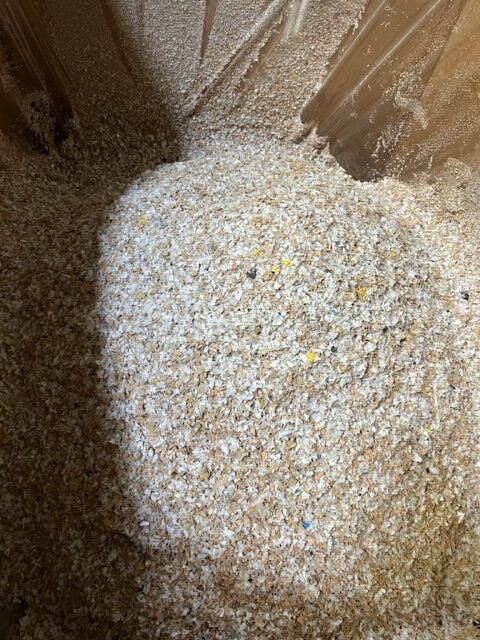
What we divert
Our specialty is post-industrial plastic. These are the streams we see most often from DFW plants and warehouses:
- HDPE and polypropylene scrap: runners, sprues, purgings, start-up scrap and rejected parts
- Worn-out plastic totes, crates, drums and pallets
- Off-spec, obsolete or recalled product, destroyed first and then recycled where the materials allow
- Polypropylene campaign yard signs, which we accept at no charge
- Other rigid plastics, reviewed case by case based on resin and contamination
Not sure about a material? Send a description or a photo and we will tell you whether we can take it and how it should be packed. For cardboard and mixed recyclables, see our commercial recycling service.
How it works
- Tell us what you throw away. Call or send the form with the materials you generate, rough weekly or monthly volume, and how they are stored today. Photos help.
- We sort out what can be diverted. We tell you which streams we can process, which need product destruction first, and which belong elsewhere.
- Set up separation and containers. Gaylords or bins at the presses, lines or docks where scrap is made, one material per container, with a roll-off outside if your volume calls for it.
- Pickups on a schedule that fits. Material is hauled to our Fort Worth facility on a regular schedule or when you call, or you can bring it in yourself.
- We process it. Plastic is ground into regrind for molding and compounding. Keep the weight ticket from each load so you can track how much you diverted.
Want the longer version, with mistakes to avoid? Read our guide to landfill diversion for businesses. We serve manufacturers, distributors, retailers and OEMs across Dallas-Fort Worth and North Texas.
Measuring Your Diversion Rate
Your diversion rate is the share of your total waste, by weight, that goes somewhere other than the landfill. The math is simple:
Diversion rate = weight diverted ÷ (weight diverted + weight landfilled)
For example, a plant that sends 12 tons of plastic scrap and cardboard to recycling in a month and 8 tons of trash to the landfill has a diversion rate of 12 ÷ 20, or 60%. Weight tickets from each load are the easiest record to keep, because they come with every pickup.
Who usually asks for these numbers
- Your customers. Larger buyers often score suppliers on waste and recycling, and ask for diversion figures during audits or contract renewals.
- Your own corporate office. Many companies set waste reduction goals for every site and need each plant to report against them.
- Zero-waste certification. Programs such as TRUE certification look for at least 90% diversion, measured over time.
- Green building and ESG reporting. Diversion figures feed into sustainability reports and building certifications such as LEED.
Even if no one is asking yet, the same tracking shows you which streams are worth separating and how much you’re paying to landfill material that has value.
Frequently Asked Questions
What is landfill diversion?
Landfill diversion is any practice that keeps waste out of the landfill, mainly recycling and reuse. For a manufacturer, the biggest share is usually clean production scrap that can be reprocessed into raw material. Your diversion rate is the share of your total waste that goes somewhere other than the landfill.
Is landfill diversion more expensive than trash service?
Often it costs less once it is running, because clean, sorted scrap leaves as a recyclable commodity instead of paid disposal. How much you save depends on your volume, how clean the material is and current scrap markets. Ask us to look at your streams and we will tell you where the savings are.
Which plastics can you take?
Our main materials are post-industrial HDPE and polypropylene. We review other resins case by case. Keeping each resin separate and free of trash, metal and paper is what makes a load recyclable.
Where do I start if I have never tracked our waste?
Walk the plant with whoever empties the dumpsters and note what fills them, where it comes from and how fast. Most sites find two or three materials make up most of the volume. Start with those and add more streams once the first ones are running smoothly.
What does “zero waste to landfill” mean?
It means a site diverts nearly all of its waste from the landfill through reduction, reuse and recycling. Certification programs such as TRUE set the bar at 90% diversion or higher. Most plants work toward it one material stream at a time.
Does incineration count as diversion?
It depends on who is measuring. Some programs count waste-to-energy as diversion and some don’t. Recycling plastic scrap into regrind counts under every definition, which is one reason it’s a good place to start.
Start keeping your scrap out of the landfill
Call 682-841-1305 or send the form. We reply within one business day.