
Roll-Off Hauling in Fort Worth, TX
We deliver roll-off containers to businesses in Fort Worth and across Dallas-Fort Worth, then pick them up when they are full. Because AP&J is a plastics recycler, loads of plastic scrap come back to our plant to be ground into regrind instead of going to the landfill.
Contact Us
Share your details, and we'll be sure to get back to you within one day.
A hauler that recycles what it picks up
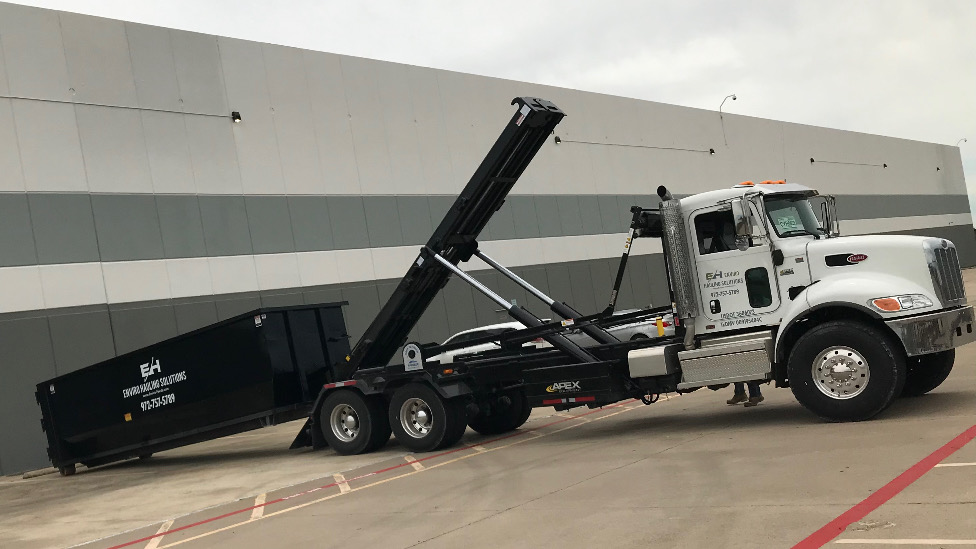
A roll-off is a large open-top steel container that our truck sets down at your site and later pulls back up onto its frame. It is the practical way to move a lot of scrap, bulky material or cleanout waste without daily trips or piles on the dock.
Most haulers drop a box and tip every load at the landfill. We run our roll-off service for industrial and commercial customers, and we process post-industrial plastic ourselves. Your HDPE and polypropylene scrap is turned into raw material for molding and compounding, which helps your landfill diversion numbers as well as your housekeeping.
AP&J is family-owned and based at 990 Haltom Road in Fort Worth, so you deal with the same people who process your material.
What we haul
Our roll-off service is built around businesses that produce scrap faster than a regular dumpster can handle:
- Steady HDPE and polypropylene scrap from molders and extruders: runners, purgings and rejected parts
- Bulky plastic items such as totes, crates, drums and pallets
- Returns, damaged goods and obsolete inventory from distribution centers and retailers, often paired with product destruction
- Line changeovers, warehouse resets and one-off plant cleanouts
Hazardous materials need their own handling and never go in a standard roll-off. That includes paints, solvents, chemicals, batteries, used oil and pressurized cylinders. If you are unsure about anything in a load, ask before it goes in the container.
Setting up a container that works
Recycling programs usually stall because of containers, not material. A box that fills before pickup day spills scrap onto the floor. One that sits half empty means you pay to haul air. One placed across the building from the presses gets ignored. We help you avoid all three by matching the container to your volume, putting it near where scrap is made, and keeping one material per container when you want it recycled. Size is measured in cubic yards, and we will recommend one once we know what you are hauling.
Container sizes
We offer four open-top sizes. The 20, 30 and 40-yard containers are 22 feet long and 8 feet wide; the wall height changes with the size.
| Size | Dimensions | Holds about | Good for |
|---|---|---|---|
| 15 yard | Ask for exact size | 5 to 6 pickup-truck loads | Heavy, low-volume loads such as concrete, dirt or roofing tear-off, and small cleanouts |
| 20 yard | 22′ × 8′ × 4′ | 6 to 8 pickup-truck loads | Steady plastic scrap from one or two lines, small warehouse resets |
| 30 yard | 22′ × 8′ × 5′ | 9 to 12 pickup-truck loads | Larger plant cleanouts and ongoing scrap from several lines |
| 40 yard | 22′ × 8′ × 6′ | 12 to 16 pickup-truck loads | Bulky, lightweight material in high volume, such as totes, pallets and warehouse or retail cleanouts |
Every container has a weight allowance. Heavy material such as concrete or dirt reaches it long before the container looks full, so tell us what’s going in and we’ll match the size to the weight as well as the volume.
How it works
- Tell us about the job. What goes in the container, roughly how much per week (or in total for a cleanout), your address and where the container can sit.
- We recommend a setup. Container size, placement and a pickup schedule, whether ongoing or one-time.
- Delivery. Our truck sets the container in the agreed spot. It needs a clear approach and enough overhead room for the hoist.
- Fill, then swap or remove. Keep material below the top edge. We pick up the full container on schedule or when you call, and drop an empty one for ongoing service.
- Processing. Plastic scrap comes to our Fort Worth plant and is ground into regrind. For scrap you want back, ask about toll processing.
We serve businesses across Dallas-Fort Worth, including Fort Worth, Haltom City, North Richland Hills, Richland Hills, Watauga, Keller, Saginaw, Haslet, Alliance, Justin, Northlake, Roanoke, Hurst, Bedford, Colleyville, Grapevine, Southlake, Coppell, Flower Mound, Highland Village, Lewisville, Corinth, Denton, Dallas and Weatherford. For more on container types and pickup schedules, see our guide to roll-off hauling for DFW businesses.
Frequently Asked Questions
What size roll-off do I need?
It depends on how much material you produce between pickups and how much room you have. A container that fills too fast means extra hauls, and one that is too big wastes space and money. Tell us what you are hauling and how often, and we will recommend a size.
Can recyclables and trash go in the same container?
They can, but the recyclables will usually end up landfilled with the trash. If you want your plastic scrap recycled, give it its own container and label it. Mixed loads make sense only for cleanouts where nothing is worth recovering.
How often will you pick up?
That is set by your volume. Busy plants may need a swap every few days, others weekly, and some only call when the container is full. A month of real pickups usually shows the right schedule, and we can adjust it when production changes.
Do I need a permit for a roll-off?
On your own private lot, usually not. A container placed on a public street or right-of-way may need a city permit, and the rules vary by city across DFW. Check with your city if the container cannot sit on your property.